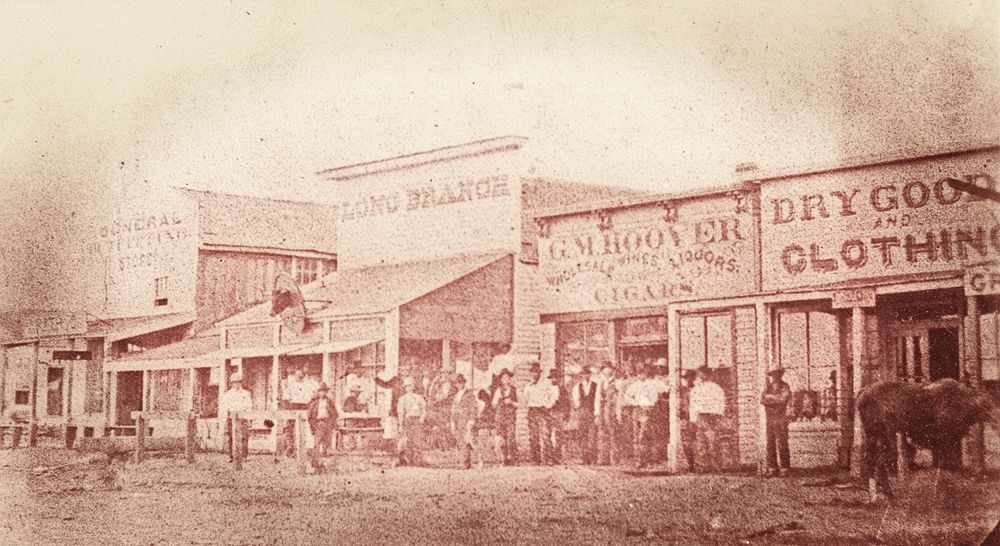
Dodge City – 1870s
My father, Joel Samuel Wright, was a great fan of the Gunsmoke television series. As far back as I can remember, Gunsmoke was on during primetime in color (well, after we got a color set). I enjoyed the drama, the comedy, and the cozy relationship between the characters. The banter between Doc and Festus (or Chester, depending on your age) was classic!
Watching the show, we saw gunslingers pass through, most to be shot by Marshall Dillon. We also saw heart-rending stories of life on the frontier, with families fighting off Indians, wild animals, or outlaws. While good people always stepped up to help one another, only the strongest were successful out there and, in many episodes, people turned back to the east.
The most common site in the show was the Long Branch Saloon. Miss Kitty Russell was the proprietor (by the way, no one bothered to speak about the fact that she was a madam. In a day when the television censors were very active, it was just something everyone simply overlooked). She ran that place with an iron fist! Why, there were seldom shootouts in there, and you rarely saw someone try to take advantage of her ladies (the ones being paid to be taken advantage of).
While I enjoy watching Gunsmoke from time to time, I was not a diehard fan of the old west. Modern historical movies such as Tombstone and Wyatt Earp were not movies in which I had much interest. However, I did always love a good John Wayne movie and would sit through a good Clint Eastwood Spaghetti Western.
But last weekend that changed a bit. While sitting in the Short Family Reunion at Old Mt Tabor Cemetery near Glenwood, AR, I heard a passing anecdote of a gunslinger and gambler named Short who was famous for killing a more famous gunslinger. I was instantly intrigued, and while the research was speaking, I pulled out my phone and began a search for this man. The search returned the name Luke Short, born in 1848 in Polk County, Arkansas.
My first reaction was to drill down his family tree, but as I read his history another name came into the picture. In 1881, Short arrived at Dodge City and began working as a dealer at the Long Branch Saloon. At this time the saloon was owned by William H. Harris and Chalkley “Chalk” Beeson. In 1883 Chalk sold his interest to Short.
At this point, I was in a quandary. Did I research Short or Beeson? You see, While Edmund Wright’s fourth wife and my great grandmother was a Short, we Wrights are also Beesons! So, I had a decision to make right then and there! You may ask why I was surfing on my phone while a researcher was talking about Short family history. I can only say to you that I have ADHD, and this is normal behavior!
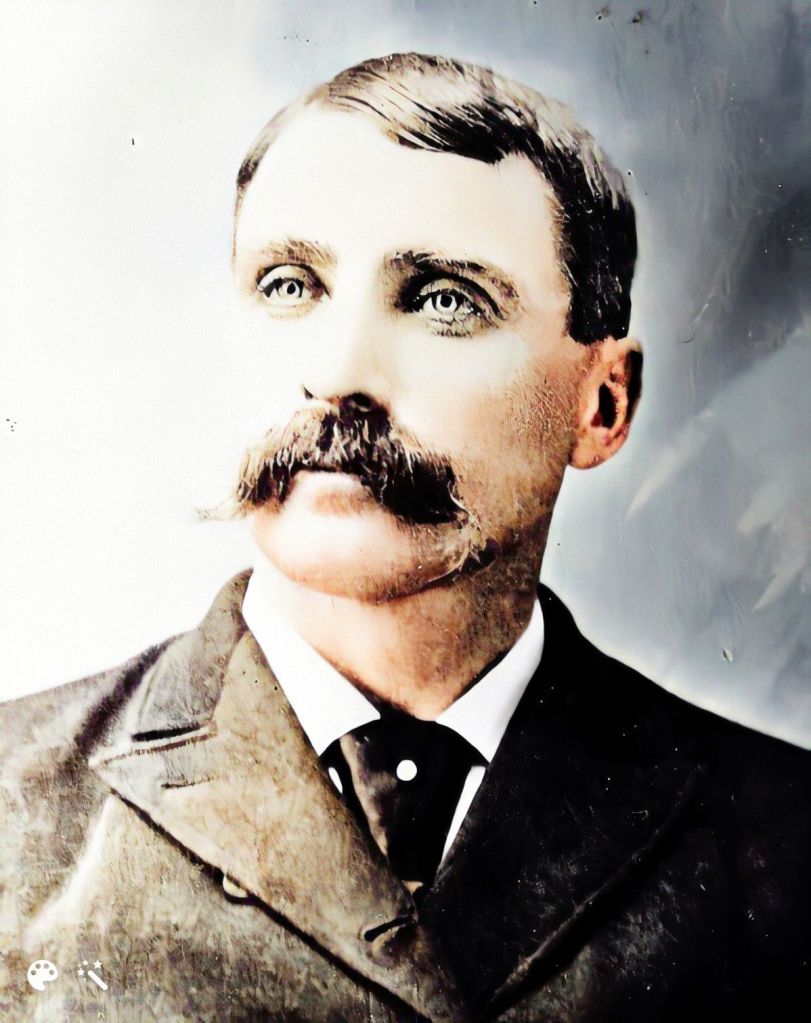
So, down the rabbit hole I went! Something told me that Chalk Beeson was family. Besides just having a gut feeling, the main rationale I used was that the Beeson name is far less common than the Short name.
It turns out that Chalk Beeson was the great-grandson of none other than Henry Beeson. Henry also happens to be the great-grandfather of Edmund Wright. Henry’s daughter, Phebe Beeson-Schooley, is sister to Richard Beeson, Chalk’s grandfather, making Edmund and Chalk second cousins.
Chalk grew up in Columbiana County, Ohio. If this sounds familiar, it is because Edmund’s great-grandfather Joseph Wright settled in and died in Columbiana County. Henry Beeson, after founding Uniontown, PA in 1776 with his brother Jacob, had taken his family to help homestead Columbiana County, OH around the same time the Wrights and the Schooleys arrived. Being Quakers, the Beeson and Schooley families were no doubt very close. Henry’s daughter, Phebe, married John Schooley on March 26, 1807. Their daughter Anne Jane Schooley married Thomas Wright, our Edmund’s father.
Chalk left Ohio at the age of eighteen and made his way to the frontier… Kansas. Chalk was obviously a brilliant man. He was an accomplished musician, an astute businessman and a forward-thinking entrepreneur. One of the first things Chalk did after reaching Kansas was become owner of his own saloon, the Saratoga. This saloon was not the type of saloon you are accustomed to hearing about in the west. In the Saratoga, instead of being entertained by prostitutes, you were serenaded by a full orchestra! I have to attribute this to Chalk’s Quaker heritage.
Chalk also served as Ford County Sheriff for a time. One of his accomplishments as Sheriff was tracking down the Doolin gang. He also participated in a few gunfights. Chalk, along with his partners, Bat Masterson and Bill Hickock, kept the streets of Dodge City safe.
Another venture of Chalk’s was as a buffalo tour guide. Through this, he became friends with the Grand Duke Alexis of Russia. Others with whom Chalk became acquainted through his tours included Kit Carson, General Phil Sheridan, and General George Custer.
Beeson was successful in all his endeavors, including farming and ranching. But one of the most unexpected successes was his band, The Dodge City Cowboy Band, which he formed in 1879. This band was indeed made up of cowboys. It performed for all occasions in Dodge, and even performed in Washington, DC at the inauguration of Benjamin Harrison in 1889.
In 1932, Chalk’s son Merritt opened the Beeson Museum in Dodge City. It was open for 32 years. In 1964 its collections were sold to the Boot Hill Museum.
So, if you travel to Dodge City, keep your eyes open. While you never heard his name on Gunsmoke, Chalkley Beeson was and still is a pretty big deal there!


 The Wrights of Montgomery County Arkansas